

 English
 中文简体
中文简体
Small hand-held objects often appear simple at first glance. A flour filled stress ball is one of them. It sits quietly in the hand, soft and slightly uneven, changing shape every time it is squeezed.
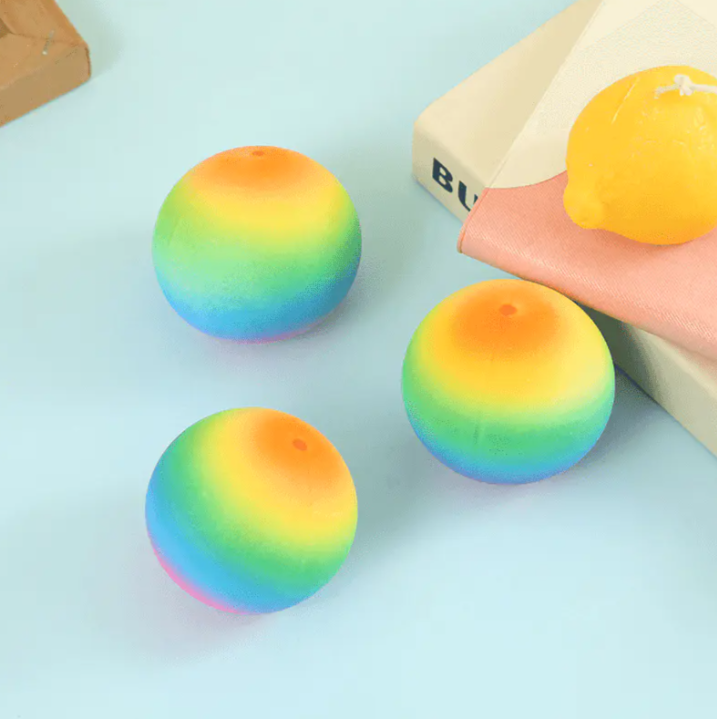
There is no screen, no sound, and no instruction. Just pressure and release. Yet this simple interaction is often linked to moments of mental relief in daily life.
The effect is not about the object itself alone. It comes from how the body and mind respond during repeated physical interaction.
Why Does Physical Squeezing Feel Calming?
When a stress ball is squeezed, the hand applies steady pressure. That action engages muscles in a repetitive motion that feels predictable.
Predictability matters. The body tends to settle when movements are simple and repeated. There is no decision-making involved, only action and release.
This cycle creates a small break from mental overload. Attention shifts away from thoughts and into physical sensation.
Even short interactions can create a noticeable pause in mental activity.
What Role Does Texture Play In The Experience?
Flour Filled Stress Ball Factory have a distinct texture compared to firmer or liquid-filled alternatives. The material inside shifts slowly under pressure.
That resistance is not rigid. It is soft, slightly uneven, and responsive to touch.
This irregular movement gives feedback to the hand. Each squeeze feels slightly different, even if the action is repeated.
That variation keeps attention anchored in the present moment. The mind stays engaged with sensation instead of drifting toward external stress.
How Does Repetitive Motion Affect Mental Focus?
Repetition plays a quiet role in how stress is managed.
When the same motion is repeated, the brain does not need to process new decisions. It begins to settle into rhythm.
Squeezing and releasing becomes a loop. That loop reduces mental switching between different thoughts or tasks.
The focus shifts from problem-solving to simple physical interaction.
This does not remove stress completely. It creates a short space where attention is redirected.
Can It Help During Work Or Study Pressure?
Many people keep small stress objects nearby during work or study periods.
The reason is not distraction, but interruption control. When pressure builds, the object provides a physical outlet that does not require leaving the workspace.
A quick squeeze, a moment of hand movement, then a return to task.
This short cycle can make high-focus environments feel less mentally dense. It does not change workload, but it changes how the mind pauses between tasks.
Why Do Hands Play A Central Role In Stress Relief?
Hands are closely connected to sensory feedback. They respond quickly to touch, pressure, and texture.
When hands are active, the brain receives continuous physical input. That input can compete with repetitive internal thoughts.
A flour filled stress ball uses this natural connection. The hand stays engaged, and attention follows.
It is not a distraction tool in the traditional sense. It is more like a channel for physical grounding.
What Makes Flour Fill Different From Other Materials?
Inside a stress ball, different fillings create different reactions.
Flour-based filling tends to feel softer and more adaptive. It shifts slowly and does not bounce back quickly.
This slower movement creates a more gradual response under pressure.
Instead of a quick rebound, the shape changes and holds for a moment before returning.
That delay can make the interaction feel more calming for some users, especially during repetitive squeezing.
How Does It Support Emotional Reset Moments?
Stress does not always build in large steps. Often it accumulates gradually through small tasks, interruptions, and constant attention shifts.
A simple object can interrupt that buildup cycle.
The act of squeezing creates a physical pause. During that pause, attention moves away from external demands.
This does not solve the cause of stress. It interrupts the momentum of it.
After a few moments, returning to tasks often feels slightly more manageable.
Can It Influence Attention And Concentration?
Attention is not fixed. It moves between focus and drift.
A stress ball does not increase attention directly. Instead, it helps regulate how attention shifts.
When mental load feels scattered, a short physical action can reset the direction of focus.
Hands engage, breathing slows slightly, and attention returns to a single point of sensation.
That shift is subtle, but it can help stabilize concentration over time.
Where Are Flour Filled Stress Balls Commonly Used?
These objects appear in many environments where mental pressure builds gradually.
| Environment Type | Typical Use Situation |
|---|---|
| Workspaces | Short breaks during tasks |
| Study areas | Momentary focus resets |
| Travel settings | Idle time management |
| Home environments | Relaxation during downtime |
| Waiting spaces | Managing idle attention |
The use is not limited to one setting. It depends more on personal habit than environment rules.
Why Do People Keep Reaching For Simple Stress Objects?
Complex tools are not always necessary for simple moments of pressure.
A stress ball does not require setup or learning. It is immediately usable.
That simplicity is part of its appeal. It is always available, always responsive, and always predictable.
The interaction is short and repeatable. No preparation, no instruction, no outcome required.
That makes it easy to return to whenever needed.
How Does It Fit Into Modern Stress Patterns?
Modern routines often involve constant input. Messages, tasks, and shifting attention are common throughout the day.
In that environment, small physical objects offer a contrast.
They do not demand attention. They absorb it briefly and return it.
A flour filled stress ball fits into that pattern naturally. It does not interrupt life. It briefly reshapes how attention flows within it.
That small shift is often enough to create a sense of pause before continuing.
 +86-159 8313 8795
 No. 188, Weisi Road, Licun Village, Xiaoshun Town, Jindong District, Jinhua, Zhejiang, China