

 English
 中文简体

Placing a bulk order for novelty squeeze toys involves more than comparing product photos and unit prices. Buyers need to understand how a supplier manages material selection, product consistency, production planning, quality inspections, and shipment preparation. These details become particularly important for distributors, promotional gift companies, retailers, and wholesalers handling multiple product styles or repeat orders.
At Hongrui, we understand that every purchasing project has its own requirements. Some customers need established designs for wholesale distribution, while others require customized colors, packaging, or product details for specific sales campaigns. Our approach focuses on clear communication and practical production arrangements so buyers can evaluate each stage before confirming an order.
For customers considering a squeeze monster toy, reviewing the supplier's production capabilities and quality management procedures can help reduce purchasing uncertainty. The following points explain the details we recommend checking before moving from an initial inquiry to a confirmed bulk order.
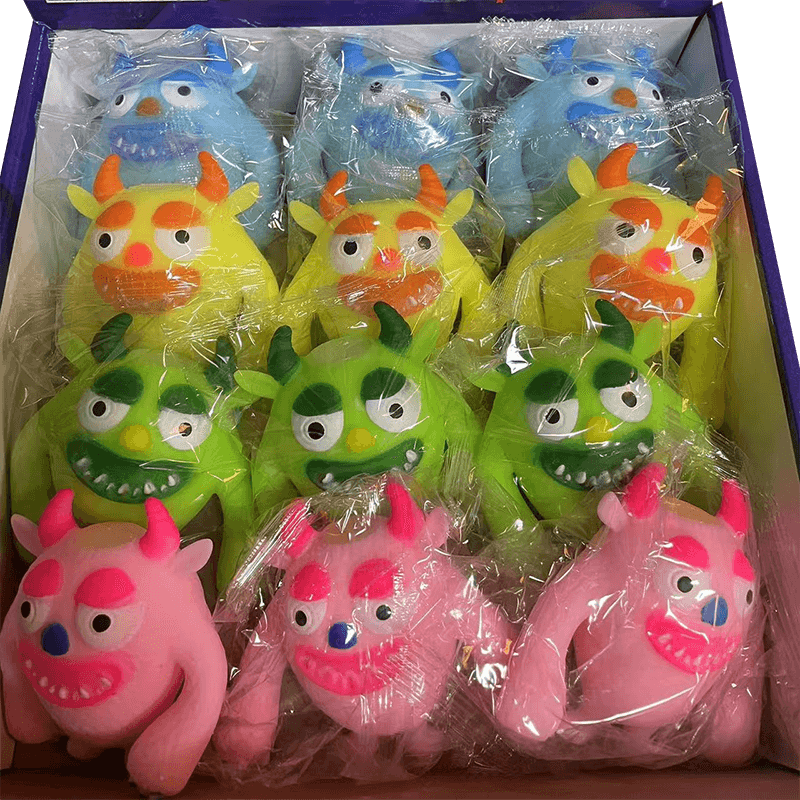
1. Material Information Should Be Clear Before Quotation
Material composition affects the product's flexibility, surface appearance, tactile response, durability, and production requirements. A supplier should be able to explain the material used in the proposed design rather than relying on general descriptions such as soft, flexible, or comfortable.
At Hongrui, we recommend confirming several material-related details during the quotation stage:
- Material type: Confirm the actual material used for the outer body and any internal components. Different formulations can produce different surface textures and compression characteristics.
- Flexibility: Discuss the expected softness and deformation behavior under normal hand pressure. Buyers should identify the tactile characteristics required for their target market.
- Surface condition: Check whether the product requires a smooth, matte, glossy, or specially treated finish.
- Color stability: Clarify the available color options and the reference standards used to maintain consistency across production batches.
- Material documentation: Request relevant technical information and test reports for the exact material and product configuration.
Material descriptions should be recorded in the product specification. This makes it easier for both parties to compare the approved sample with subsequent production batches. It also provides a reference for evaluating any proposed material changes.
2. Production Capacity Must Match the Purchasing Plan
A supplier's ability to manufacture a product should be evaluated against the buyer's actual order requirements. A quotation alone does not explain how production resources will be arranged or how multiple specifications will be managed.
We encourage buyers to discuss the following production details with Hongrui before confirming an order:
- Available production models: Confirm whether the supplier can manufacture the requested designs, colors, and size variations.
- Production arrangements: Ask how the factory organizes material preparation, molding, finishing, inspection, and packing.
- Daily or monthly output: Request an estimated production capacity based on the actual product and manufacturing process.
- Multi-style orders: Check whether different designs can be arranged within the same purchasing project and how each SKU will be identified.
- Production scheduling: Confirm the estimated manufacturing period and the factors that could affect the agreed delivery schedule.
Buyers should also distinguish between general factory capacity and the capacity available for a particular order. Production resources may be shared across different projects, so a written schedule provides a clearer understanding of the arrangement.
3. Quality Control Should Cover Multiple Production Stages
Consistent product quality requires more than a final visual inspection. Differences in material batches, molding conditions, product dimensions, surface finishing, and packaging can affect the appearance of finished goods.
At Hongrui, we consider quality control an important part of order management. Buyers should understand which inspection activities are included and how defects are handled during manufacturing.
Important Inspection Points
- Incoming material inspection: Check material appearance, color, identification, and relevant purchasing records before production begins.
- Production inspection: Monitor molding quality, product shape, surface condition, and visible manufacturing defects during processing.
- Dimensional inspection: Compare the finished product with the agreed size specifications and approved sample.
- Functional inspection: Evaluate the expected squeezing response, deformation behavior, and surface condition according to the product design.
- Final inspection: Review appearance, color, workmanship, quantity, and packaging before shipment.
We also recommend establishing written acceptance criteria for each order. For example, buyers can specify the permitted color variation, acceptable surface condition, dimensional tolerance, and requirements for visible defects. A clear inspection standard makes communication more objective and helps both parties handle quality concerns efficiently.
4. Safety Testing and Compliance Documents Need SKU-Level Verification
Safety documentation is another important part of supplier evaluation, particularly for products intended for children's markets. Buyers should not assume that one general certificate automatically covers every design, material formulation, or product variation.
For the US market, ASTM F963 is incorporated into the mandatory children's toy safety requirements under 16 CFR Part 1250. The applicable requirements depend on the product's construction, intended age group, and relevant hazard categories. The US Consumer Product Safety Commission identifies Section 4.24 as the specific section covering squeeze toys.
Our recommendation is to clarify the following information before placing an order:
- Which safety standards and testing requirements apply to the intended sales market?
- Does the available test report identify the same product model and material configuration as the proposed order?
- Are the testing laboratory and report details verifiable?
- Are age grading, warning statements, and applicable tracking information included in the product documentation?
- Who will coordinate the required testing and certification documents for the shipment?
For children's products subject to applicable US requirements, importers and manufacturers should also understand their responsibilities regarding third-party testing and Children's Product Certificates (CPCs). We encourage customers to define these requirements according to the destination market and exact product specification rather than relying on broad compliance claims.
5. Sample Approval Should Establish a Production Reference
Product images are useful during the inquiry stage, but they cannot fully demonstrate material feel, actual dimensions, surface finishing, or manufacturing details. A physical sample provides a more practical reference for evaluating the proposed design.
At Hongrui, we recommend confirming the following sample details before approving bulk production:
- Overall dimensions: Record the product's length, width, height, and any important design measurements.
- Appearance: Confirm the shape, facial details, decorative elements, and surface finish.
- Color references: Use agreed color samples or Pantone references where applicable.
- Tactile response: Review softness, compression, and recovery characteristics according to the intended application.
- Packaging: Check the proposed individual packaging, labels, inserts, and outer carton arrangement.
Once the sample is approved, we recommend keeping a documented record with photographs, specifications, and revision details. This reference helps our production team understand the confirmed requirements and gives buyers a practical basis for comparing finished goods.
6. Customization Services Should Be Defined Before Production
Customization can involve several different requirements. A distributor may only need a particular color combination, while a promotional gift company may request customized printing, branded packaging, or a completely different appearance.
Before confirming a customization project with Hongrui, buyers should clarify the following items:
- Color customization: Provide the preferred color references and identify whether different colors need separate production arrangements.
- Logo application: Confirm the logo position, dimensions, printing method, and artwork format.
- Shape modifications: Identify whether the request involves an existing design adjustment or new mold development.
- Packaging design: Provide packaging dimensions, artwork, labeling requirements, and barcode information where necessary.
- Sample revisions: Establish how design changes will be reviewed and approved before mass production.
We also advise customers to discuss the cost implications of customization separately. New molds, special surface treatments, printing, and customized packaging may involve different preparation costs. A detailed quotation should identify the included services and any additional charges.
7. Packaging and Logistics Should Be Part of the Supplier Review
Finished products need suitable packaging and clear shipment arrangements before they leave the factory. Packaging decisions influence product protection, warehouse handling, retail presentation, and transportation planning.
Our team recommends discussing these practical details during order confirmation:
- Individual packaging: Confirm whether each unit requires a polybag, display box, printed carton, or another packaging format.
- Carton specifications: Check carton dimensions, packing quantities, gross weight, and net weight.
- Shipping marks: Confirm product identification, destination information, and any special handling instructions.
- Mixed-SKU packing: Define the quantity and assortment ratio for orders containing multiple styles or colors.
- Shipment arrangements: Discuss the estimated completion date, shipping method, destination port, and required trade documents.
Buyers should also request carton measurements before arranging freight. Accurate packing information supports container planning, freight quotations, and warehouse preparation. Any changes to packaging or assortment should be confirmed before the goods are packed.
8. Communication and Order Management Matter After Confirmation
A supplier relationship does not end once the purchase order is signed. Production updates, design revisions, inspection results, and shipment documents all require consistent communication.
At Hongrui, we believe that a clearly organized order process helps customers manage purchasing activities with fewer misunderstandings. We recommend establishing a communication record that covers:
- Confirmed product models, quantities, and specifications.
- Approved samples and the latest artwork versions.
- Material or production changes requiring customer approval.
- Manufacturing progress and inspection arrangements.
- Final packing details and shipment documentation.
- Procedures for reporting and resolving quality issues.
Written records are particularly useful for repeat orders. They help us compare new purchasing requirements with previous specifications and identify any changes that need additional confirmation. Buyers can also use these records to evaluate supplier responsiveness and order management over time.
What Should Buyers Include in a Supplier Inquiry?
A detailed inquiry helps Hongrui understand the project and prepare a quotation based on actual purchasing requirements. Rather than sending only a product image, buyers can provide the following information:
- Product model or reference image.
- Preferred material and product dimensions, if specified.
- Required colors and design variations.
- Estimated order quantity for each SKU.
- Customization and logo requirements.
- Destination market and applicable compliance documents.
- Individual packaging and carton specifications.
- Target shipment schedule and delivery destination.
Providing these details allows us to review the project more accurately and identify technical or commercial questions before production planning begins.
 +86-159 8313 8795

 No. 188, Weisi Road, Licun Village, Xiaoshun Town, Jindong District, Jinhua, Zhejiang, China
