

 English
 中文简体
中文简体
Growing interest in sensory toys has pushed many users to question what sits inside modern squishy products. Maltose Stress Ball designs are often promoted with a “sugar-based” filling idea, which creates confusion about whether the material is actually edible or purely functional.
Food-Origin Ingredient With Industrial Processing
- Maltose comes from starch breakdown, commonly extracted from malted grains
- Chemical structure is a disaccharide composed of glucose units
- Industrial-grade maltose is refined into syrup form rather than food crystals
- Used as a viscosity-controlled gel inside squeeze toys
Maltose itself is widely recognized in food chemistry, yet the version used in stress toys is not marketed as edible. The syrup undergoes processing steps that adjust thickness, moisture retention, and rebound behavior. This gives the filling a controlled resistance that feels dense under finger pressure rather than sticky or liquid-like.
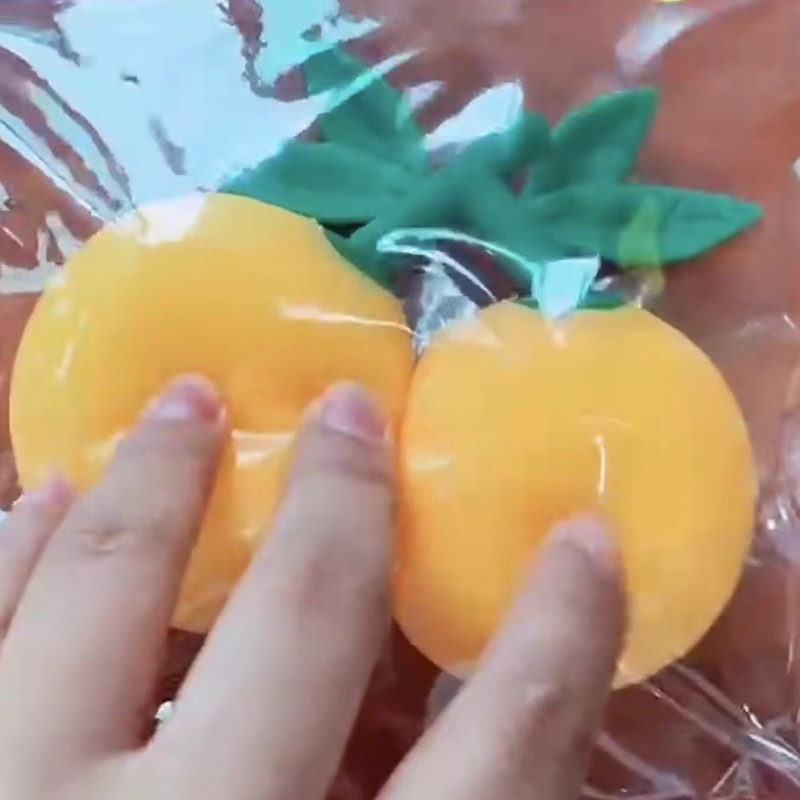
Why Maltose Gel Feels Different in Squeeze Toys
- High internal viscosity creates slow deformation under pressure
- Elastic recovery varies depending on polymer additives blended into the syrup
- Temperature sensitivity affects firmness during extended use
- Outer shell tension influences perceived softness
Users often describe maltose-filled designs as “heavy squeeze” toys. The slow rebound effect comes from internal molecular friction inside the syrup gel. This structure differentiates it from foam or cornstarch-based fillers, which behave more like dry compressible solids.
Leakage Risks in Maltose Stress Ball Structures
Reports of rupture or seepage usually relate to mechanical stress on the outer membrane rather than instability of the filling itself. The internal syrup remains stable, yet containment materials determine durability.
Shell Construction Weak Points
- Thermoplastic elastomer shells range from 1.0 mm to 2.5 mm thickness in common models
- Seam bonding lines remain the most vulnerable rupture points
- Repeated high-force squeezing accelerates micro-tearing
- UV exposure gradually reduces elasticity of outer layer
Durability testing in consumer-grade samples often simulates 5,000 to 20,000 compression cycles. Lower-cost variants may show failure earlier due to inconsistent wall thickness or weak sealing around injection ports.
Internal Filling Behavior Under Pressure
Texture Response and Flow Dynamics
- High-density syrup shifts slowly rather than splashing internally
- Localized pressure creates delayed shape recovery
- Small air pockets may develop after extended use
- Cooling conditions increase perceived firmness
The internal behavior of Maltose Stress Ball products is influenced by viscosity modifiers and stabilizers. These additives prevent crystallization and maintain a smooth, uniform squeeze sensation across repeated use cycles.
Consumer Concerns Around Safety and Contact Use
Although maltose originates from food-related sources, safety standards for toy applications treat it as a non-food material once processed into gel form.
Material Safety Classification
- Non-toxic classification under general toy safety frameworks
- Outer casing typically tested for heavy metal limits
- Internal gel designed for incidental exposure tolerance
- Not intended for ingestion despite sugar origin
Testing standards in regulated markets often include migration checks for chemical residues and elasticity durability checks under repeated deformation. Even though maltose itself is mild, additives used for texture control determine final compliance level.
Usage Behavior and Product Longevity Observations
Wear Patterns Over Time
- Surface dulling appears after extended hand friction
- Micro-stretching can reduce rebound consistency
- Internal gel may separate slightly under temperature cycling
- Grip marks remain visible on softer shell grades
Consumer feedback often highlights that maltose-based stress toys maintain tactile satisfaction longer under moderate use compared to lightweight foam alternatives. However, aggressive squeezing patterns shorten structural lifespan regardless of filling type.
Maltose Stress Ball products combine food-derived chemistry with engineered elasticity systems. The result is a dense sensory object shaped by syrup viscosity, shell resilience, and temperature response. While the ingredient name suggests a natural origin, the final product functions as a non-edible industrial gel system designed for repeated mechanical deformation rather than consumption.
 +86-159 8313 8795
 No. 188, Weisi Road, Licun Village, Xiaoshun Town, Jindong District, Jinhua, Zhejiang, China