

 English
 中文简体
中文简体
A Stress Relief Toy Manufacturer usually looks simple. Small, quiet, easy to hold. People pick it up without thinking, often in the middle of work or while waiting. That moment of use is short, but it may happen many times in a day.
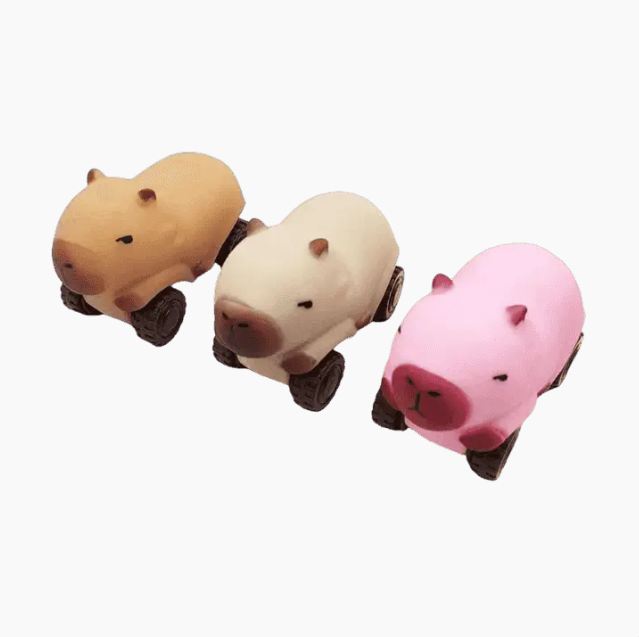
For manufacturers, the real question is not how to make something that looks interesting on a shelf. It is how to make something people keep reaching for without effort. Engagement grows from repeated use, not from first impressions alone.
Design plays a quiet role here. Small details shape how a product feels in the hand, how it responds, and whether it becomes part of daily habits.
Why does touch feel more important than appearance?
When people use a stress relief toy, they rely more on touch than sight. Many users do not even look at the object while using it. Their attention stays on work, while their hand moves on its own.
Because of this, the way the surface reacts becomes central.
If the feedback feels too flat, the interaction ends quickly. If it feels too unpredictable, it may become distracting. A steady, familiar response tends to hold attention longer.
A gentle resistance, followed by a smooth return, often feels more natural than sharp or uneven reactions. Over time, this creates a small sense of rhythm.
How does shape guide the way people use it?
Shape decides how a toy is held, pressed, or moved. It also affects whether someone picks it up again after putting it down.
Rounded forms are often easier to hold for longer periods. Edges that are too sharp or uneven may feel uncomfortable after a while.
Some designs fit fully in the palm. Others are held between fingers. Each shape leads to a slightly different motion.
Designers usually think about:
- How quickly the object can be picked up
- Whether it works with one hand
- How it feels during repeated movement
If a shape requires adjustment each time it is used, people may lose interest. Ease of handling often matters more than visual uniqueness.
Do colors and visual style really affect engagement?
Color does not directly change how a toy works, but it shapes the mood around it.
Soft tones can feel calm and quiet. Bright colors may feel more playful. Neutral shades often blend into workspaces without drawing attention.
Some users prefer items that do not stand out too much, especially in shared environments. Others enjoy more visible designs that add a bit of character to the desk.
Visual cues can also suggest how to interact with the object. A slight change in surface or pattern can guide where to press or hold.
Still, overly complex designs may feel busy. Simpler visuals tend to feel easier to live with over time.
Why do simpler designs often stay in use longer?
It might seem that adding more features would make a toy more interesting. In practice, too many elements can divide attention.
A single clear action is often enough. Pressing, rolling, or stretching. When the interaction is easy to understand, people do not need to think about it.
This matters during moments of stress. A complicated object asks for attention. A simple one allows the mind to rest.
That is why many long-lasting designs focus on one main function instead of several.
How does durability shape long-term use?
A stress relief toy is used repeatedly. Sometimes many times within a short period.
If it loses its shape or changes its feel too quickly, the experience becomes less satisfying. The user may stop using it, even if the design looked appealing at the start.
Durability is not something users always notice at first. It becomes clear over time.
A stable structure, combined with a consistent response, builds trust. The toy feels the same each time it is picked up.
What makes a toy suitable for different environments?
People do not use these products in one fixed place. They move between desks, rooms, and sometimes outdoor settings.
A practical design adapts quietly.
Noise is one factor. Loud clicking or sharp sounds may not fit shared spaces. A softer interaction often feels more appropriate.
Size also matters. A compact form is easier to carry and store.
Appearance plays a role as well. Some users prefer designs that blend into the background rather than stand out.
A toy that fits into different settings is more likely to stay in regular use.
How does repetition support a calming effect?
Many stress relief toys rely on repeated motion. The action itself becomes the focus.
Press and release. Roll back and forth. Stretch and return.
These movements are simple, but they create a steady pattern. The body follows the motion, and attention shifts away from other thoughts.
For this to work, the response needs to stay consistent. Each movement should feel similar to the last.
Irregular feedback can interrupt the rhythm. A smooth, predictable cycle helps maintain it.
What balance is needed between new ideas and familiar use?
Fresh shapes and unique features naturally draw people's interest. They spark curiosity and encourage users to try out something new and different.
Still, if the way you interact with a product feels too strange or unfamiliar, most people won't stick with it long‑term.
People rely on everyday motions they already know and trust: squeezing, pressing, rolling. These simple movements are easy to repeat without extra thought.
Good design strikes a careful balance. It brings in small creative tweaks while keeping the core actions familiar and intuitive.
The result is a product that feels exciting and new at first touch, yet comfortable and easy to get used to with regular use.
How do materials affect everyday experience?
The materials chosen directly change how a product feels to the touch and how it holds up through daily use.
Some surfaces feel soft and warm against your hand, while others are sleek or slightly firm. Each texture sends its own subtle sensory feedback as you handle it.
Grip also makes a real difference. A surface that's overly slippery can feel hard to hold steadily. A slight amount of resistance gives a more secure, stable feel in everyday use.
Materials also determine how the toy reacts when pressed or squeezed, and how well it bounces back to its original shape afterward.
Users may not consciously notice these little differences, but they quietly shape the whole feel of using the product day‑to‑day.
What creates a sense of control during use?
Feeling in control is a simple but key part of enjoying an interactive product like a toy.
When every movement you make brings a clear, expected reaction, using the product becomes much more satisfying.
This doesn't need complicated internal parts. Even a simple squeeze gives that sense of control if the toy responds consistently and predictably every single time.
This steady response builds reliability. Users learn exactly what will happen each time they interact with it, and that builds confidence in use.
How do small details influence the overall impression?
Some design features jump out right away, while many more subtle touches shape the experience quietly.
Think about smoothly finished edges, surfaces that don't trap dust easily, or shapes that fit naturally in your hand with no awkward adjusting needed.
These little details don't stand out on their own, but together they define how the toy feels when held and played with.
Well‑designed items feel intuitive from the start. They don't need written instructions to understand. You know how to use them simply by touching and handling them.
Feature Overview Table
| Design aspect | Effect on use | Daily experience |
|---|---|---|
| Tactile response | Creates feedback during interaction | Encourages repeated motion |
| Shape | Guides how it is held | Improves comfort |
| Visual style | Sets mood and preference | Influences first impression |
| Simplicity | Keeps interaction clear | Reduces effort |
| Durability | Maintains structure over time | Supports long-term use |
| Portability | Allows use in many places | Increases frequency of use |
| Repetition | Builds steady rhythm | Supports relaxation |
| Material feel | Shapes touch and grip | Affects comfort |
Why do some designs become part of daily routine?
People tend to keep using items that feel easy and familiar.
A stress relief toy does not need to stand out in every moment. It needs to fit quietly into daily behavior.
When it is easy to pick up, simple to use, and consistent in response, it becomes part of routine without effort.
Over time, the design fades into the background. The action remains. And that quiet, repeated use is often what defines whether a product stays or is set aside.
 +86-159 8313 8795
 No. 188, Weisi Road, Licun Village, Xiaoshun Town, Jindong District, Jinhua, Zhejiang, China