

 English
 中文简体
中文简体
TPR squeeze toys sit at the center of the modern stress-relief trend, often shaped as animals, fruits, or soft abstract forms. Their appeal comes from slow rebound, soft tactile feedback, and lightweight portability. Concerns appear frequently online about safety during repeated daily squeezing, especially for users who keep them on desks or carry them in bags. The discussion is not only about comfort but also about material behavior over time.
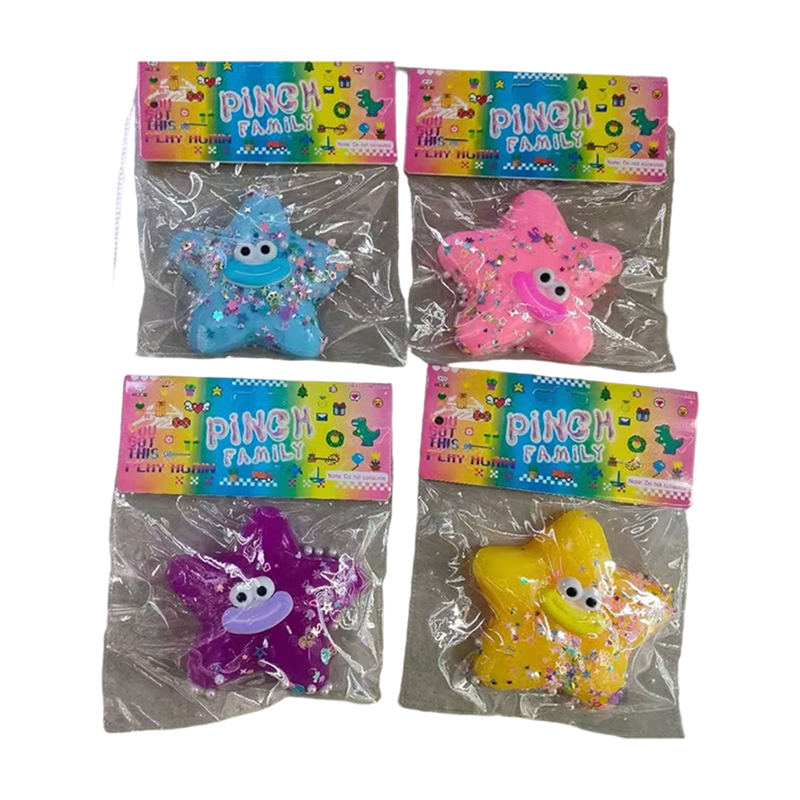
Material identity behind TPR squeeze toys
TPR Material Squeezing Toy products belong to thermoplastic elastomer families, usually based on SBS or SEBS polymers. These structures combine rubber-like elasticity with plastic reprocessability. A stable formulation generally avoids BPA and can be designed without phthalates, depending on production standards. Industry documentation notes that properly made TPR is widely used in toys and skin-contact goods due to its flexibility and compliance potential with ASTM F963 or EN71 frameworks.
Material safety depends heavily on compound purity, additive selection, and curing stability. Low-grade versions may introduce fillers or inconsistent plasticizers that affect long-term surface performance. These differences explain why identical-looking squeeze toys may behave very differently after weeks of use.
Daily use safety perception and real material behavior
Daily stress relief use usually involves repeated compression cycles, often hundreds of squeezes per session. TPR responds with elastic deformation, but internal polymer chains can gradually shift under continuous stress.
- Surface stability changes – extended handling may cause slight tackiness or a smoother oily touch due to additive migration in lower-grade materials.
- Odor sensitivity – some users notice a mild chemical smell, often linked to volatile residues from molding or insufficient curing.
- Elastic memory fatigue – repeated deformation can reduce rebound speed, making the toy feel less “springy” over time.
Reports on squishy toy materials show that instability usually appears as stickiness, residue, or odor rather than immediate structural failure. These signs are often linked to formulation quality and surface treatment rather than inherent danger alone.
Chemical safety discussion around TPR materials
TPR is generally considered chemically stable in its intended applications, with many formulations designed to be free from BPA and restricted plasticizers. Safety assessments often highlight that the base polymer is inert under normal conditions, reducing direct chemical interaction risk during hand contact.
However, additives used for softness, color, or scent control can influence long-term perception. Lower-cost squeeze toys may include higher additive loads, which can increase odor intensity or surface migration. This does not automatically indicate toxicity but does affect user comfort and trust.
Porosity and long-term hygiene considerations
TPR structures are typically microporous compared with silicone alternatives. This physical property creates discussion around hygiene in repeated-use items. Porosity does not necessarily impact casual stress toys as strongly as intimate-use products, yet it still influences durability perception.
- Micro-texture retention – pores can hold dust or oils from hands over long-term use.
- Cleaning limitations – surface washing is effective, but deep material cleaning is not possible.
- Aging visibility – older toys may appear duller or slightly discolored due to accumulated surface exposure.
These characteristics are well-documented across thermoplastic elastomer categories and are part of why high-end sensory toys often shift toward alternative materials for premium positioning.
Daily stress relief use and mechanical durability
Stress squeeze toys rely on repeated compression recovery. TPR elasticity allows thousands of cycles under normal indoor conditions. Mechanical durability is generally sufficient for casual desk use, but not unlimited.
Key technical behaviors include density range around 0.9–1.2 g/cm³ depending on fillers, Shore hardness commonly between 00-20 to 00-60 for soft variants, and elongation capacity that can exceed 300% in optimized formulations. These values support a soft tactile experience while maintaining shape recovery under moderate pressure.
Practical safety interpretation for everyday users
Daily safety concerns around squeeze toys usually focus more on sensory quality than acute hazard. Consumer attention often shifts toward smell, stickiness, and durability because these factors directly affect user comfort during repeated interaction.
- Stable TPR formulation – minimal odor, consistent rebound, dry-touch surface
- Lower-grade formulation – stronger smell, faster surface aging, uneven elasticity
- User environment impact – heat, sunlight, and storage conditions accelerate surface change
Understanding these differences helps explain why two visually identical squeeze toys may deliver completely different user experiences over time.
Material comparison insight in real usage context
TPR squeeze toys occupy a middle ground between cost efficiency and tactile performance. They offer a softer feel than rigid plastics and broader shaping freedom than many foam-based alternatives. Stability remains acceptable for general stress relief, while premium silicone alternatives typically provide higher resistance to aging and surface change.
In real-world usage, safety perception is strongly influenced by tactile consistency rather than chemical exposure events. A stable TPR formulation that maintains surface integrity and neutral odor is generally perceived as safe for daily stress relief routines.
TPR squeeze toys continue to remain popular due to affordability and sensory satisfaction. Their safety profile is closely tied to manufacturing quality, material purity, and usage environment. Daily interaction does not inherently pose risk under standard consumer use, yet long-term experience depends on how well the material resists surface aging and additive migration. Understanding these material traits helps users interpret changes in texture or smell more accurately rather than relying on assumptions.
 +86-159 8313 8795
 No. 188, Weisi Road, Licun Village, Xiaoshun Town, Jindong District, Jinhua, Zhejiang, China