

 English
 中文简体
中文简体
Reports about squeeze stress ball damage continue to rise across consumer discussions, especially around products used for daily hand fidgeting. Breakage rarely comes from a single factor. Instead, structural fatigue, filling behavior, and shell chemistry interact over repeated compression cycles.
Internal Pressure Distribution During Repeated Squeezing
- Compression forces concentrate at the fingertip contact zones rather than spreading evenly
- Elastic shells deform beyond the recovery threshold after repeated overstretch cycles
- Fillings such as gel, powder, or foam shift unevenly under stress
- Micro-air pockets form and expand during repeated rebound cycles
Mechanical fatigue becomes more visible after extended daily use. Even materials designed for elasticity eventually lose uniform tension balance. Gel-filled variants often maintain shape consistency longer, while powder or foam-filled designs show earlier internal redistribution that affects outer shell stress points.
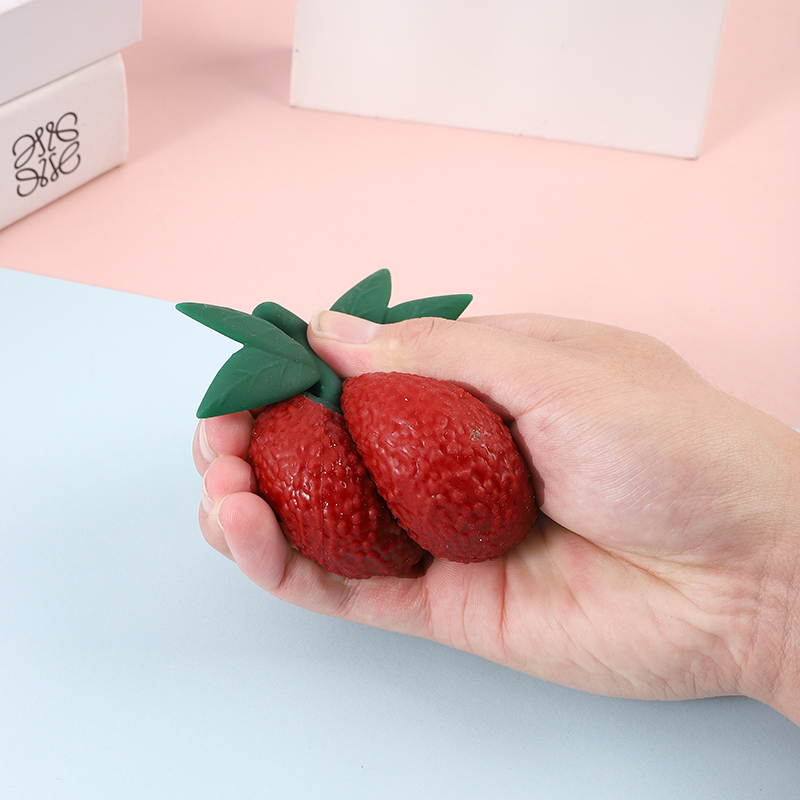
Shell Material Fatigue and Micro-Crack Formation
- TPE and latex shells typically range between 1.0–2.5 mm thickness
- Repeated stretching causes microscopic fracture lines near seams
- Oil from skin contact gradually weakens polymer elasticity
- Ink-printed areas often show earlier structural degradation
Consumer product observations and safety discussions highlight seam regions as primary failure points. These zones experience higher stress concentration during squeezing, twisting, or pinching actions. Once micro-cracks appear, internal filling pressure accelerates expansion of weak points until visible rupture occurs.
Filling Type Influence on Breakage Speed
Different Internal Materials, Different Stress Behavior
- Gel fillings distribute force more evenly across internal volume
- Powder-based fillings create shifting pressure zones during compression
- Foam structures rebound quickly but lose structural memory after heavy use
- Water-based gels may expand or contract slightly with temperature variation
Gel-filled squeeze stress ball products generally maintain consistency longer due to uniform internal flow. Powder-filled versions behave more like granular systems, where particle rearrangement causes uneven internal pressure points. This unevenness often translates into higher strain on specific shell areas.
Temperature and Environmental Sensitivity
- Heat exposure softens elastomer shells and reduces tensile strength
- Cold conditions increase brittleness and reduce flexibility
- UV light accelerates surface aging and color fading
- Humidity may influence powder clumping inside certain fills
Environmental conditions play a silent role in breakage patterns. Products stored in cars, near windows, or in fluctuating temperature spaces tend to show earlier fatigue signs compared to stable indoor environments. These changes accumulate slowly before sudden failure appears.
Leakage and Rupture Behavior in Real Use
Consumer safety reports and product investigations show that rupture is rarely instantaneous without prior micro-damage. Small leaks often precede full failure.
Common Failure Triggers in Daily Handling
- Excessive squeezing force beyond design tolerance
- Repeated pinching near injection or sealing points
- Accidental puncture from fingernails or sharp objects
- Material aging combined with long-term compression stress
Recent consumer safety discussions highlight that gel leakage can create sticky residues and, in rare cases, skin irritation. Powder leakage tends to appear as fine dust, while foam degradation often manifests as tearing fragments. Each failure mode depends heavily on internal filling type and shell resilience.
User Behavior Impact on Product Lifespan
How Usage Patterns Accelerate Wear
- High-frequency squeezing increases cumulative stress cycles per day
- Twisting motions create torsional strain on seam lines
- Grip concentration in one area leads to uneven deformation memory
- Continuous use without recovery time reduces elastic rebound efficiency
Real-world user reports frequently mention that stress ball durability varies widely even within the same product category. The difference often comes down to handling intensity rather than manufacturing alone. Gentle compression patterns significantly extend functional lifespan, while aggressive or repetitive force shortens it noticeably.
Material Safety and Post-Break Considerations
Industry safety references indicate that most squeeze stress ball fillings are non-toxic under normal exposure conditions. However, rupture introduces practical concerns related to cleanup and incidental contact.
Handling After Damage Occurs
- Clean leaked material promptly to avoid sticky residue buildup
- Avoid continued use once shell integrity is compromised
- Keep broken pieces away from children and pets due to choking risks
- Wash hands after contact with internal filling materials
Research summaries from consumer safety organizations emphasize that the main hazard is physical obstruction or irritation rather than chemical toxicity. Once damage appears, replacement is generally safer than continued use.
Squeeze stress ball failure results from combined mechanical fatigue, material aging, and internal pressure redistribution. Shell seams remain the most vulnerable area, while filling type and environmental exposure influence how quickly stress accumulates. Regular inspection and moderate use patterns reduce premature breakage, though all designs eventually reach structural limits under repeated deformation.
 +86-159 8313 8795
 No. 188, Weisi Road, Licun Village, Xiaoshun Town, Jindong District, Jinhua, Zhejiang, China