

 English
 中文简体
中文简体
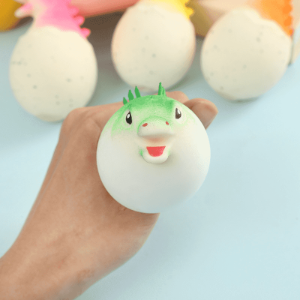
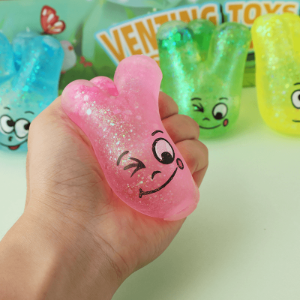
Sand filled squishy toys attract attention because of their dense, shifting texture and slow deformation response. Over time, the internal sand structure does not stay uniform, and this directly affects squeeze behavior, rebound speed, and overall hand feel.
Granular Movement Inside Flexible Shells
- Fine sand particles typically range from 100–500 microns in toy-grade formulations
- Particles shift independently under compression, creating internal flow zones
- Repeated squeezing increases packing density in localized areas
- Air gaps between grains gradually reduce after extended use
Sand behaves as a granular system rather than a continuous gel. Each press redistributes particles inside the elastic casing, and the internal structure slowly reorganizes into tighter clusters. This is the reason why sand filled squishy toys often feel heavier or more compact after extended handling sessions.
Why Shape Retention Becomes Uneven
- Internal compaction increases resistance in high-pressure zones
- Moisture exposure encourages slight clumping of fine grains
- Shell elasticity adapts unevenly based on squeeze patterns
- Micro-shifts in sand distribution alter rebound symmetry
Reports from users and product discussions often mention that sand filled squishy toys begin to lose their original “balanced” feel after repeated use. The material inside does not degrade chemically in most cases, yet physical rearrangement alone is enough to change how the toy responds under pressure.
Outer Shell Stress Points in Sand Filled Designs
Durability issues in sand filled squishy toys usually originate from the containment layer rather than the sand itself. The outer membrane must withstand constant friction, stretching, and pressure redistribution.
Material Construction Characteristics
- Common shell materials include TPE, silicone, and polyurethane elastomers
- Typical wall thickness ranges from 1.0 mm to 2.2 mm
- Seam joints represent high-stress concentration points
- Injection ports may weaken structural uniformity
Consumer safety reports and product breakdown analyses show that many squishy toy failures occur at seams or fill points. Even high-flexibility materials can develop micro-tears after repeated deformation cycles, especially near areas that experience twisting or uneven pressure.
Environmental Influence on Shell Performance
- Heat exposure reduces long-term elasticity retention
- UV light accelerates surface aging and brittleness
- Dust and oil contamination reduce surface friction stability
- Cold conditions stiffen shell response and reduce flexibility
Even normal indoor environments can contribute to gradual performance changes. Placement near windows or heating sources often increases material fatigue over time, especially for softer elastomer grades.
Leakage Behavior and Sand Dispersion Patterns
Unlike gel-based stress toys that release sticky fluid, sand filled squishy toys show leakage in a more subtle particulate form. Small grains can escape through microscopic openings before visible rupture occurs.
Common Failure Triggers
- Pinpoint punctures caused by fingernails or sharp edges
- Seal fatigue around injection areas
- Excessive twisting during squeezing sessions
- Aging rubber losing elasticity balance
Recent consumer reports and product safety discussions highlight that many squishy toy breakages happen gradually rather than suddenly. Small leaks may appear as fine dust near high-pressure zones before any major rupture occurs.
Tactile Experience Compared With Other Fillings
Sand Versus Gel and Foam Response
- Sand creates heavier, slower deformation under pressure
- Gel fillings produce smoother and more uniform rebound
- Foam structures return quickly but feel lighter
- Granular systems provide more variable resistance during squeeze cycles
Sand filled squishy toys are often chosen for their grounded, weight-like feedback. The sensation comes from particle friction and internal rearrangement rather than elastic rebound alone. This makes each squeeze slightly different depending on internal distribution at that moment.
Safety Notes and Usage Observations
Recent safety investigations into squishy toys emphasize careful handling and regular inspection, especially for products with fine particulate fillings.
Practical Handling Considerations
- Avoid biting or puncturing outer layers during use
- Check for seam wear or small leaks regularly
- Keep away from high heat environments
- Stop use once structural damage appears
Sand filled squishy toys remain popular due to their unique tactile profile, but performance changes are expected over time due to mechanical rearrangement inside the shell. The combination of granular physics and flexible containment defines both their appeal and their limitations.
 +86-159 8313 8795
 No. 188, Weisi Road, Licun Village, Xiaoshun Town, Jindong District, Jinhua, Zhejiang, China