

 English
 中文简体
中文简体
Fruit-shaped squeeze toys have gained attention because of their colorful appearance, soft touch, and satisfying sensory feedback. Strawberry, banana, cherry, orange, and other creative designs are often used as desk companions or relaxation toys. However, some users notice an unexpected change after weeks or months of use: the surface becomes sticky, attracts dust, or feels different from the original texture.
The sticky feeling does not always come from one single cause. Material composition, surface aging, environmental exposure, and internal additives all influence how a squeeze toy behaves over time. A Creative Stress Relief Squeeze Vent Toy needs a carefully balanced structure to maintain a comfortable touch while handling repeated squeezing and daily contact.
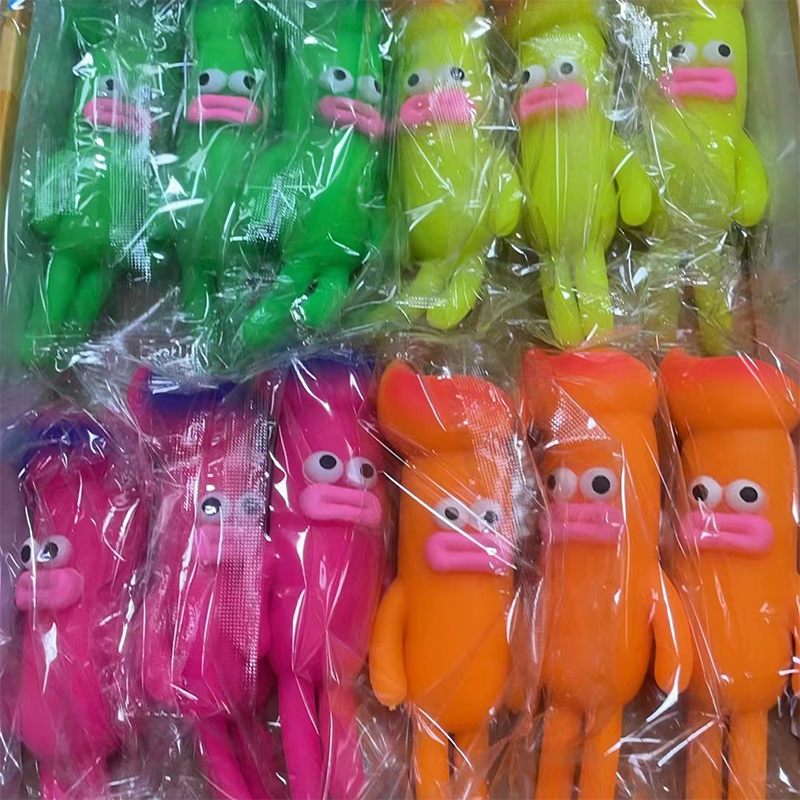
1. Soft materials create the unique squeeze experience
The soft and flexible feeling of fruit stress toys usually comes from elastomer materials such as TPR, thermoplastic rubber blends, polyurethane foam, or gel-filled structures. These materials allow the product to deform under hand pressure and recover afterward.
TPR-based designs are popular because they provide rubber-like elasticity while allowing detailed shapes. A fruit design with leaves, textures, and realistic curves can be molded more easily compared with traditional rigid plastics.
- Elastic polymer chains help the toy return to its original shape after squeezing.
- Soft-touch additives improve hand feel and reduce a hard plastic sensation.
- Surface modifiers influence smoothness, friction, and long-term texture.
Popular fruit squishy products often highlight soft rubber materials, slow rebound performance, and repeated squeezing ability as major selling points.
2. Additive migration can create a sticky surface
One major reason squeeze toys become sticky is the movement of internal additives toward the surface. Flexible materials often contain ingredients that improve softness and elasticity. Over time, some low-molecular components may slowly migrate outward.
This process can create a slightly oily or tacky feeling on the exterior.
- Plasticizer migration – certain softening agents may move toward the surface after long-term storage or repeated handling.
- Surface residue accumulation – dust, skin oils, and environmental particles may attach more easily to softened surfaces.
- Material aging – oxidation and temperature changes can gradually alter surface properties.
Sticky texture does not automatically mean a product contains unsafe substances. It is often a sign that the surface chemistry or physical condition has changed over time.
3. Hand contact accelerates surface changes
Fruit squeeze toys are designed to be touched frequently. Unlike decorative items, they receive continuous contact with skin oils, sweat, dust, and different temperatures from human hands.
Repeated handling can influence the outer layer in several ways:
- Natural oils from skin may combine with surface residues.
- Warm hands can temporarily soften elastomer materials.
- Frequent squeezing increases internal pressure and surface movement.
This explains why a toy stored in a drawer may remain unchanged while another toy used every day develops a different texture.
4. Internal filling materials also affect stickiness
Not every squeeze toy uses solid TPR. Some stress-relief products contain gels or other soft fillings inside an elastic outer layer. These designs create unique sensations because users feel internal movement during compression.
However, the internal structure requires strong sealing and durable outer protection. Consumer safety reports have discussed cases where certain gel-filled squishy toys broke open and exposed sticky contents, creating concerns about mess and skin contact.
- Solid elastomer toys usually have fewer leakage concerns because there is no liquid filling.
- Gel-filled designs depend heavily on outer shell durability.
- Multi-layer structures require careful bonding between different materials.
5. Heat exposure speeds up sticky surface problems
Temperature plays an important role in the aging process of soft squeeze toys. High heat can accelerate material movement and make surfaces feel softer or more adhesive.
- Direct sunlight may increase surface temperature and affect material stability.
- Hot vehicles create conditions that may soften toy structures.
- Closed storage areas with poor ventilation can trap odors and surface moisture.
Some safety discussions around squishy toys also warn against exposing gel-filled products to extreme heat because internal materials may expand or fail under unsuitable conditions.
6. Why creative designs require better material balance
Fruit-shaped stress toys are different from simple round stress balls. Realistic details create stronger visual appeal but also increase design challenges.
- Thin leaves and stems may experience more stretching stress.
- Textured surfaces can collect more dust compared with smooth designs.
- Uneven thickness may cause different aging speeds across the toy.
A successful creative stress toy requires a balance between appearance, softness, and long-term surface stability.
7. Simple maintenance methods to reduce stickiness
Users can slow down surface changes through basic care habits.
- Clean the surface gently with mild soap and water.
- Avoid strong chemical cleaners that may damage soft materials.
- Store the toy away from heat and direct sunlight.
- Keep it in a clean area to reduce dust attachment.
Proper care does not stop natural material aging completely, but it can help maintain the original tactile feeling for a longer period.
Understanding the changing texture of fruit squeeze toys
The sticky feeling that appears on fruit stress relief squeeze toys over time is usually related to material aging, surface interaction, storage conditions, or internal formulation. A high-quality squeeze toy needs more than an attractive appearance; it requires stable elasticity, controlled softness, and reliable surface performance.
Creative stress-relief designs continue to evolve as users look for products that combine visual appeal with comfortable sensory interaction. Knowing the reasons behind surface changes helps users better understand their toys and maintain a more enjoyable squeezing experience.
 +86-159 8313 8795
 No. 188, Weisi Road, Licun Village, Xiaoshun Town, Jindong District, Jinhua, Zhejiang, China